DIY · PAWLOGIC GUIDE
Set Up a Simple At-Home Dog-Wash Station
Make bathing safer and less chaotic with traction, organization, and a clear sequence.
Before you begin
Walk through the space at your dog’s height and note access points, chewing hazards, slippery surfaces, and items that can be knocked over. Gather supplies first, read every product label, and plan a separate comfortable place for your dog while you work. A small, finished improvement is more useful than an ambitious project left halfway complete.
Prevent slipping
Place a rubber mat in the tub or shower and another on the exit path. Keep the room warm and gather everything before bringing in your dog.
Test the change during a calm part of the day and supervise the first few uses. Watch how your dog actually moves through the area; behavior is better evidence than a layout that only looks tidy. Adjust placement if the new setup blocks a familiar route or encourages reaching, climbing, or chewing.
Arrange supplies
Use dog-formulated shampoo, several towels, a cup or gentle sprayer, treats, and a brush. Keep products off the floor and caps closed.
Choose materials that can be cleaned, inspected, and replaced without dismantling the whole setup. Keep packaging and care instructions for products you may need to identify later, and avoid assuming that a product described as natural is automatically safe for pets.
Use comfortable water
Test temperature on your wrist, avoid spraying the face and ears, and rinse thoroughly. Short, calm sessions build better associations.
Test the change during a calm part of the day and supervise the first few uses. Watch how your dog actually moves through the area; behavior is better evidence than a layout that only looks tidy. Adjust placement if the new setup blocks a familiar route or encourages reaching, climbing, or chewing.
Dry the room too
Launder towels, rinse the mat, remove hair from the drain, and ventilate the space. Store supplies only after they are dry.
Choose materials that can be cleaned, inspected, and replaced without dismantling the whole setup. Keep packaging and care instructions for products you may need to identify later, and avoid assuming that a product described as natural is automatically safe for pets.
Set up before the dog enters
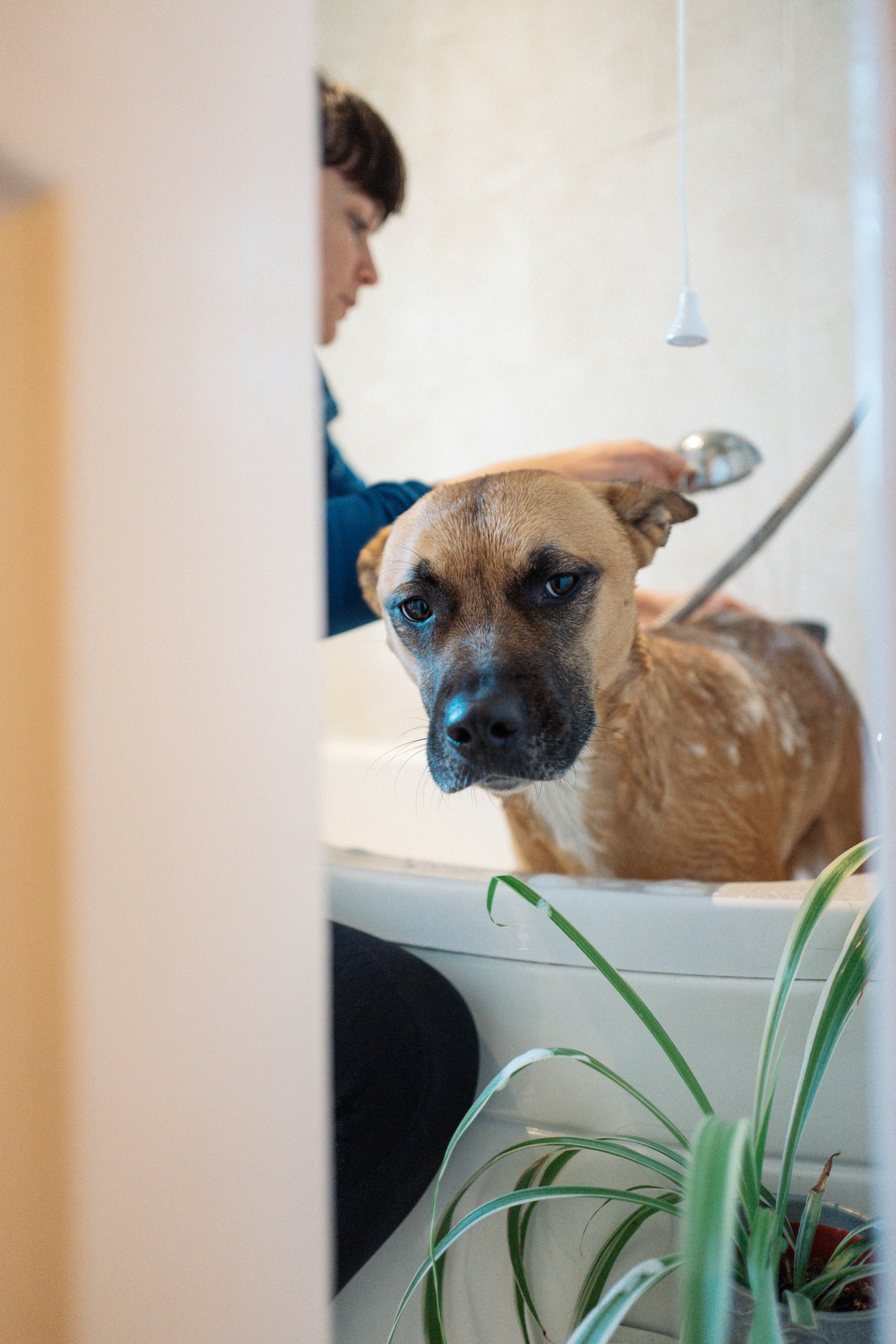
Place nonslip mats inside and outside the bathing area. Bring dog shampoo, towels, treats, a brush, and a cup or low-pressure sprayer within reach. Close doors, remove breakable objects, and test drainage. A helper is useful for large or nervous dogs, but everyone should agree on a quiet, gentle sequence.
Wash with comfort in mind
Use lukewarm water and a product formulated for dogs unless a veterinarian has prescribed something else. Protect eyes and ears, rinse methodically, and keep the session short. Do not force a frightened dog to endure escalating restraint; gradual cooperative-care practice or a professional groomer is safer for both dog and handler.
WATCH & LEARN
Veterinary guidance for bathing a dog at home
Supporting video by Veterinario Gratis. Video is hosted by YouTube and may be subject to YouTube’s terms and privacy practices.
Dry skin, coat, and room
Blot rather than vigorously rubbing tangled or sensitive coats. Use dryers only at a safe temperature and noise level, following professional guidance for coat type. Keep the dog warm until fully dry. Then collect hair, rinse the mat and tub, wash towels, ventilate the room, and store products securely.
A simple maintenance rhythm
Inspect the finished area after the first day, again after one week, and whenever the season or household routine changes. Add a quick visual check to an activity you already do, such as refilling the water bowl or taking out garden tools. Clean spills promptly, repair loose parts, and remove damaged materials instead of waiting for a larger reset.
Take a photo when the setup is working well. It becomes a useful reference after cleaning, travel, or rearranging furniture. If more than one person uses the space, agree on where supplies belong and who handles the recurring check.
Sources and further reading
Sources are provided for verification and deeper reading. PawLogic is not affiliated with these organizations.